Noorani Qaida in English for Families Who Do Not Read Urdu
Noorani Qaida in English keeps every Arabic letter and lesson of the original book, but explains each rule in English, so children and adults raised outside South Asia can follow it with ease.
Lessons are live and one-to-one, and your first week is free.
- Live one-to-one classes
- Ijazah-qualified teachers
- Male and female teachers
- 1-week free trial

Explained in English
No Urdu needed
50+ Ijazah teachers
Teaching since 2008
What It Means
What Does the English Version Actually Change?
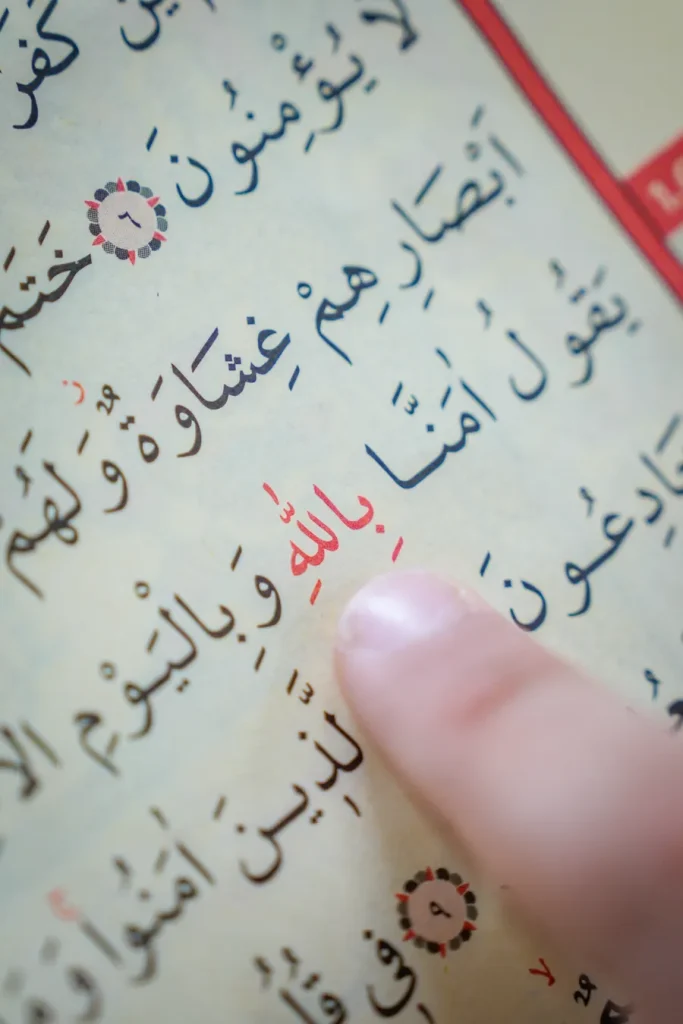
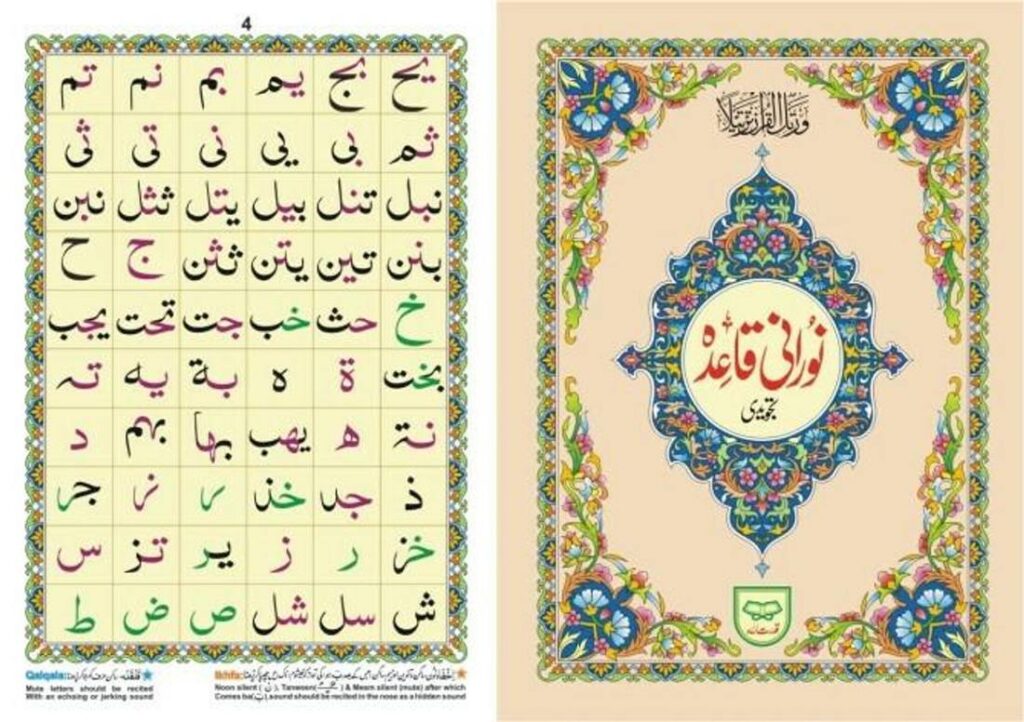
Only the instructions change. The original Noorani Qaida prints its headings and notes in Urdu, which many children in the USA, UK and Canada cannot read.
Learning the Qaida in English changes nothing in the Arabic you read. The letters, vowel marks and Indo-Pak script stay exactly the same, so the skills carry straight into the Mushaf.
Terms Table
What Are the Qaida Terms in English, Urdu and Arabic?
Every Noorani Qaida in English class uses these words. Mums and dads taught with the Urdu edition will recognise the middle column.
| Mark | Urdu Name | Arabic Name | What It Does in English |
|---|---|---|---|
| َ | Zabar | Fatha | Adds a short “a” sound |
| ِ | Zer | Kasra | Adds a short “i” sound |
| ُ | Pesh | Damma | Adds a short “u” sound |
| ْ | Jazm | Sukoon | Stops the letter with no vowel |
| ّ | Tashdeed | Shaddah | Doubles the letter |
| ً | Do Zabar | Tanween Fath | Adds “an” at the end of a word |
How a Lesson Is Taught
How Is an English Qaida Lesson Taught?
Your teacher names each letter and then describes, in English, where its sound comes from, such as “from the deepest part of the throat” for hamza.
Easy letters get a familiar comparison, like ba sounding close to the “b” in book. For letters with no English match, such as ayn or qaf, the teacher says so plainly and drills the sound slowly instead.
To check understanding, children are asked to explain a mark back in their own words, for example “a sukoon means stop.”
Who It Suits
Who Learns the Noorani Qaida With English Instructions?
Four groups ask for it most often, and each of them starts from the same first lesson on single letters.
Children Raised Abroad
Kids who speak English at school and home follow every rule without needing Urdu first.
Parents Who Learned in Urdu
Mums and dads can follow a Noorani Qaida English edition alongside their child’s lessons.
Reverts to Islam
New Muslims start from the letters with explanations in the language they already think in.
Non-South Asian Families
Arab, African and European families who prefer the Indo-Pak script still get English teaching.
Comparison
English-Explained Qaida or Urdu Qaida Book: Which Should Your Family Use?
An Urdu Qaida is the original edition with Urdu headings, still common in mosques and South Asian homes.
| Question | English-Explained Qaida | Urdu Qaida Book |
|---|---|---|
| Instructions | In English | In Urdu |
| Arabic letters and lessons | Identical | Identical |
| Suits | English-speaking children and reverts | Families fluent in Urdu |
| Helping at home | Any English-speaking parent can help | Needs a parent who reads Urdu |
| Vowel names used | Fatha, kasra, damma | Zabar, zer, pesh |
Many children use the Urdu book at the mosque and English explanations online without any problem, because the Arabic on every page is the same.

Transliteration
Should English Letters Be Written Under the Arabic?
Only for a few days, if at all. English letters cannot show the ayn, the heavy letters or the stop of a sukoon, so a child who leans on them reads the Quran wrong later.
Our teachers use English to explain sounds, not to replace the Arabic script. The beginners page explains why in more detail.
Questions
What Else Do Families Ask About the English Qaida?
Still have a question? Our team answers on WhatsApp and will help you pick the right course and time.
Is there a Noorani Qaida book in English?
Yes. Several publishers print English editions with the same Arabic lessons and English headings. Your teacher shares the pages on screen in class, so you can buy a printed copy later if you want one.
Is a free PDF good enough to learn from?
A clear PDF is fine for practice, but quality varies a lot between free files. Choose one in the Indo-Pak script with sharp vowel marks, and use it alongside a teacher, not instead of one.
Will my child also learn the Urdu names like zabar and zer?
Yes, if you would like them to. Teachers can mention both names, which helps when grandparents or a mosque teacher use the Urdu terms with your child.
Do the English and Urdu editions have the same lessons?
Yes. Both follow the same 17 lessons in the same order. Only the language of the headings and notes changes, so a child can switch between editions without losing their place.
Is the English Qaida only for children?
No. Adults and reverts use it too, and many find it easier than the Urdu edition. Our Qaida for adults page explains how lessons work at an adult pace.
How good is your teachers’ English?
Our teachers explain every lesson in clear English and are used to students raised in North America and Britain. If a child finds an accent hard to follow, tell us and we suggest another teacher.
Get started
Where Can You Learn Noorani Qaida in English With a Teacher?
Tell us who is learning, their age and the times that suit you, and our team arranges a free week of English Qaida lessons.
Call our US line
Request your free week
It takes under a minute. We will message you on WhatsApp to arrange your first class.
No payment details needed. We use your details only to arrange your classes. Privacy policy.