Most readers should start with the abridged Tafsir Ibn Kathir or Ma’ariful Quran. Tafsir al-Jalalayn is a good choice for a short daily read. The right one for you depends on how much time you have and how deep you want to go.
Reading alone takes you a long way. Reading with a teacher who explains the Arabic behind each verse takes you further. That is what our online Tafseer course offers, one-to-one.
What Is the Difference Between a Translation and a Tafseer?
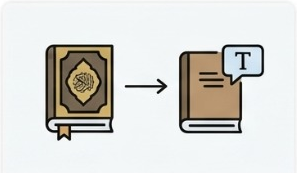
A translation gives the meaning of each verse in English, as closely as the translator can. Saheeh International and The Clear Quran by Mustafa Khattab are two widely read examples.
A tafseer explains the verse. It tells you why the verse was revealed and how the Prophet (peace be upon him) and his Companions understood it. It also explains key Arabic words and the lessons scholars took from the verse. The Quran itself invites this kind of reflection (Surah Sad 38:29).
How Do the Major English Tafseers Compare?
| Tafseer | Author | Style | Suits |
|---|---|---|---|
| Tafsir Ibn Kathir (abridged) | Ibn Kathir, 14th century | Explains verses with other verses, hadith and Companion reports | Readers who want the classical Sunni understanding |
| Ma’ariful Quran | Mufti Muhammad Shafi | Detailed, with practical rulings and spiritual lessons | South Asian families and readers who want guidance for daily life |
| Towards Understanding the Quran (Tafheem) | Abul A’la Maududi | Modern, with an introduction to every surah | Readers who want context and themes, surah by surah |
| Tafsir al-Jalalayn | Al-Mahalli and As-Suyuti | Very short notes woven into the meaning | A quick daily read or a first pass through the Quran |
| Tafsir As-Sa’di | Abdur-Rahman As-Sa’di | Clear, simple and focused on lessons | Beginners who want classical content in plain language |
| The Message of the Quran | Muhammad Asad | Translation with long notes and a personal, rational reading | Advanced readers, alongside a classical tafseer |
Explore Our Quran & Islamic Courses
Explore our online courses and choose the one that fits your learning goals.





Which Classical Works Are Available in English?
Ibn Kathir is the most read classical tafseer in English, mainly through the 10-volume abridged edition from Darussalam. Our guide to reading Ibn Kathir online shows where to find it for free.
Al-Jalalayn has a full English translation by Feras Hamza, free on altafsir.com. Aisha Bewley has translated parts of Al-Qurtubi, which we cover in our Al-Qurtubi guide. Al-Tabari, the earliest major tafseer, is only partly available in English.
How Do I Choose the Best Tafsir in English for Me?
If You Are Just Starting
Begin with As-Sa’di or Al-Jalalayn. Both are short enough to finish. They give you the main meaning of every verse without long debates.
If You Want Depth
Move to Ma’ariful Quran or Ibn Kathir. Read one surah at a time and keep notes on each verse you study.
If You Want Context and Themes
Use Tafheem’s surah introductions alongside a classical work. This way you get both the big picture and the detailed explanation.
Whichever you choose, check the author’s approach. Some modern commentaries carry the writer’s personal or political views, so read them next to a classical work, not alone.
Where Can You Read Tafseer Online for Free?
- Quran.com shows several English tafseers, including Ibn Kathir, under each verse.
- Altafsir.com hosts Al-Jalalayn and other classical works in English.
- Many publishers sell print and e-book editions, which are easier for long study.
Our post on reading the Quran with English tafseer online walks you through these sites step by step.
How Should You Study a Tafseer?
Pick one surah, not the whole Quran. Read the verse in Arabic, then the translation, then the commentary. Write down one lesson from each passage. Then read that passage again in your prayers during the week.
Start with the short surahs of Juz Amma, which you probably know by heart already. When you understand what you recite every day, your prayer feels different.
What Else Do Readers Ask About Tafseer?
Do I still need a tafseer if I read a translation?
A translation gives the basic meaning. A tafseer explains the context, the word meanings and how verses connect, which a translation alone cannot do. Most students use both together.
Can I study tafseer without knowing Arabic?
Yes. Every work in the table above is available as Quran tafseer in English. You can learn some Quranic Arabic later, which adds depth because many explanations depend on the meaning of Arabic words.
Which tafseer suits a new Muslim?
Al-Jalalayn or As-Sa’di, read slowly with a teacher who can answer your questions as they come up. Our classes for new Muslims include meaning and tafseer at a gentle pace.
Want to Study Tafseer With a Teacher?
Study the meaning of the Quran surah by surah with a qualified teacher, live and one-to-one, in English. Your first week is free.